
Explorers 2026
The Cosmic Frequencies crew are honoured to welcome on board passionate explorers across many different disciplines that want to share their exciting ideas, experiences and practices as part of our 2026 Festival! Here’s who you will meet, in order of appearance!
S.K.X Funkanauts
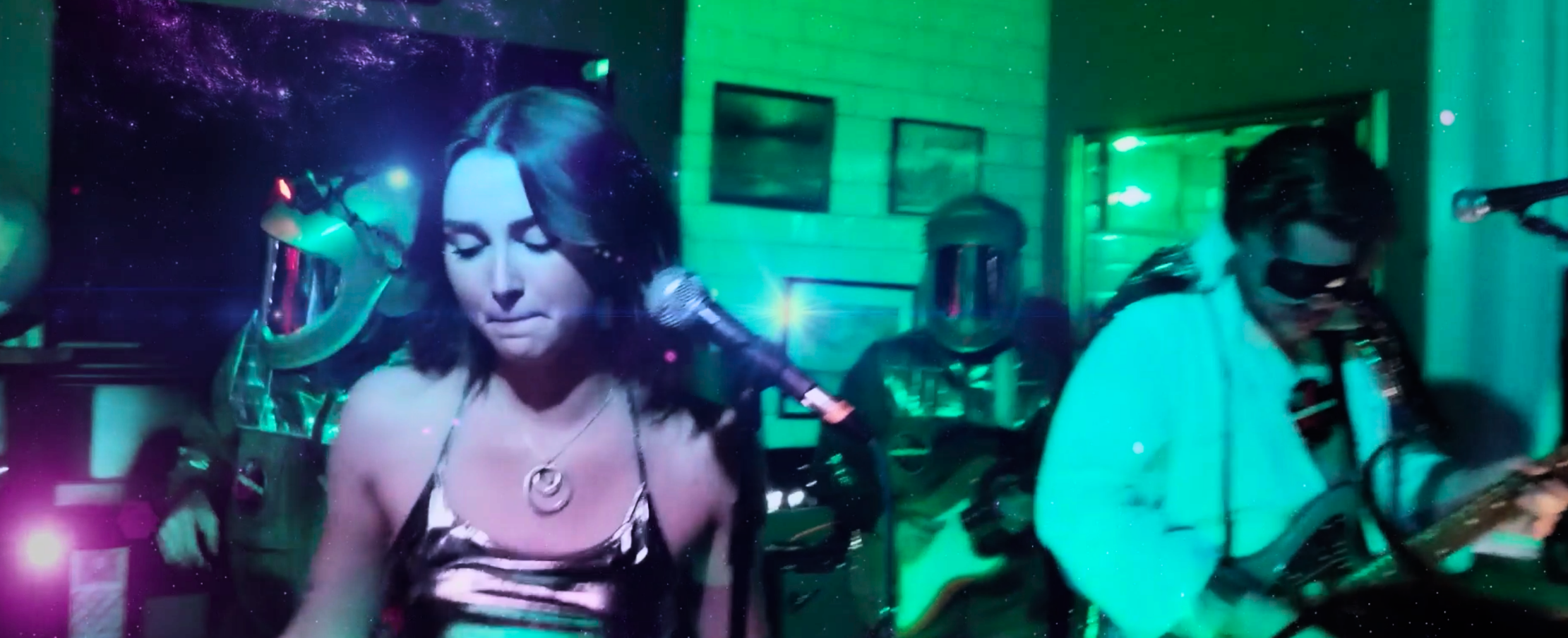
S.K.X Funkanauts are Hexham’s very own much loved space-funk outfit. The core of the band comprises Cosmic Frequencies co-founder Micheal Evans together with Peter Dunham, John Swinton and Annie but they often joined by other local musicians to launch the grooves into even higher dimensions. S.K.X stands for Sonic Kilohertz Explorers, and in their reality, they are from the planet Aldermaran 4 on a mission to transmit audio data (music) back to their home galaxy Dynatron. The Funkanauts transmissions have been described as music for the head, the heart and the hips.
Professor Carlos Frenk
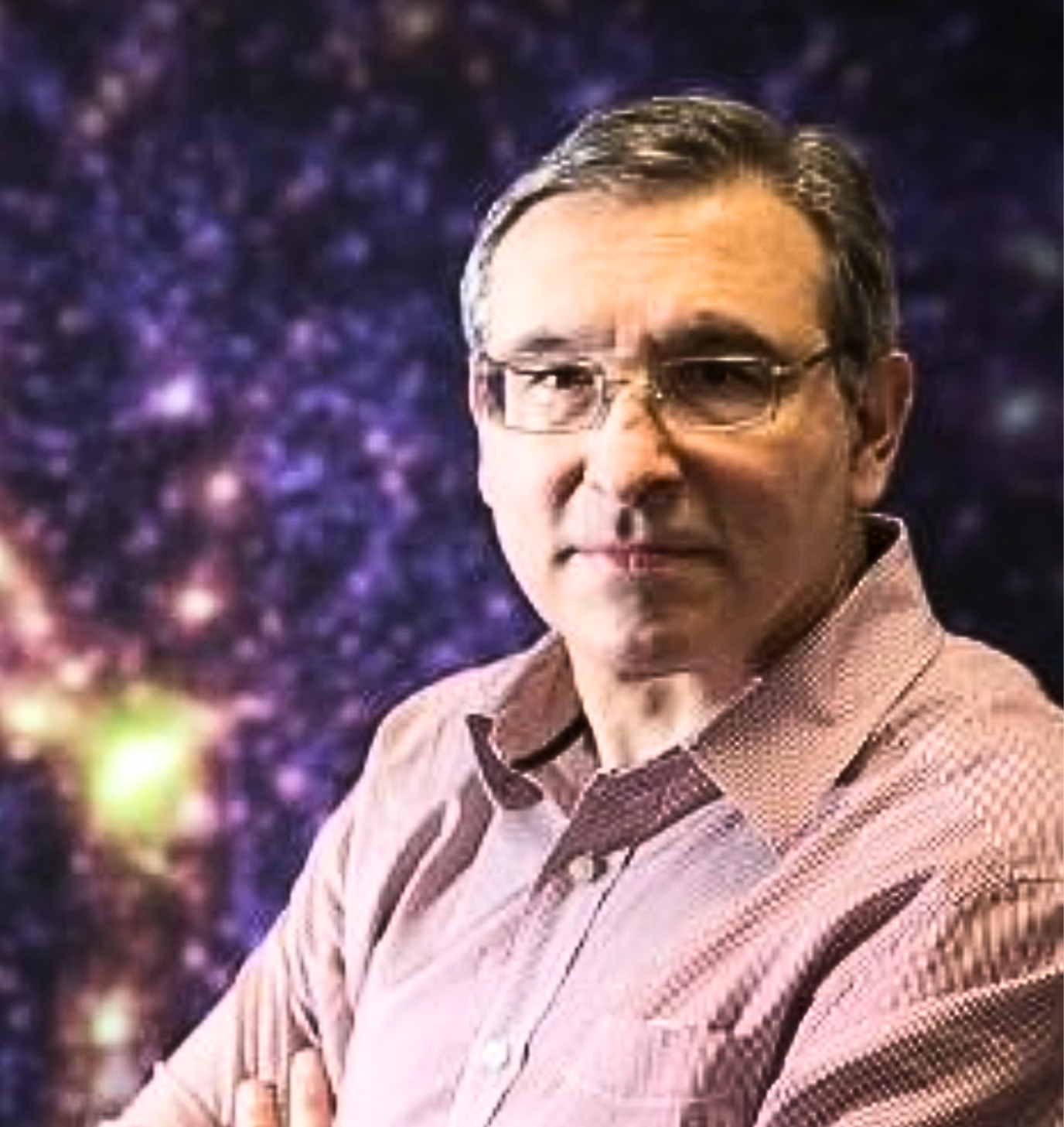
Professor Carlos Frenk is a world-leading cosmologist from Durham University. Carlos is one of the world’s foremost scientists behind the theory of cold dark matter – the mysterious substance thought to make up a large part of the universe - the foundation of the current view of galaxy formation, and the cosmic large-scale structure.
He also holds the Royal Astronomical Society’s highest honour, the Gold Medal for Astronomy, whose previous recipients include Albert Einstein, Charles Babbage and Edwin Hubble.
Additionally, Carlos was one of only 24 Clarivate 2020 Citation Laureates announced worldwide. These are researchers whose work is deemed to be “of Nobel class”, as a scientist whose work has been highly-cited by fellow scientists and whose contributions to science have been extremely influential and transformative.
Carlos received the honour for his fundamental studies of galaxy formation and evolution, cosmic structure, and dark matter halos.
Professor Philip Goff

I am a philosophy professor at Durham University, UK. I spend most of my time trying to work out the ultimate nature of reality.
My main research project is trying to work out how consciousness fits into our overall theory of reality. I argue that the traditional approaches of physicalism (consciousness can be explained in terms of physical processes in the brain) and dualism (consciousness is separate from the body and brain) face insuperable difficulties. On the basis of this I defend a form of panpsychism, the view that consciousness is a fundamental and ubiquitous feature of the physical world. It sounds a bit crazy, but I try to show that it avoids the difficulties faced by its rivals.
In my recent book Why? The Purpose of the Universe (Oxford University Press, 2023) I explore whether panpsychism can offer a kind of middle way between traditional belief in God and secular atheism.
I have also have a more general book on panpsychism aimed at a general audience – Galileo's Error: Foundations for a New Science of Consciousness (Rider in UK, Pantheon in US, 2019) – and a book on panpsychism aimed at an audence of academic philosophhers – Consciousness and Fundamental Reality (Oxford University Press, 2017). Finally, I have co-edited a collection of essays by scientists (including Carlo Rovelli, Sean Carroll, Lee Smolin, Annaka Harris, Christof Koch, and Anil Seth), philosophers, and spiritual thinkers responding to my work: Is Consciousness Everywhere? Essays on Panpsychism.
Professor Fiona Crisp
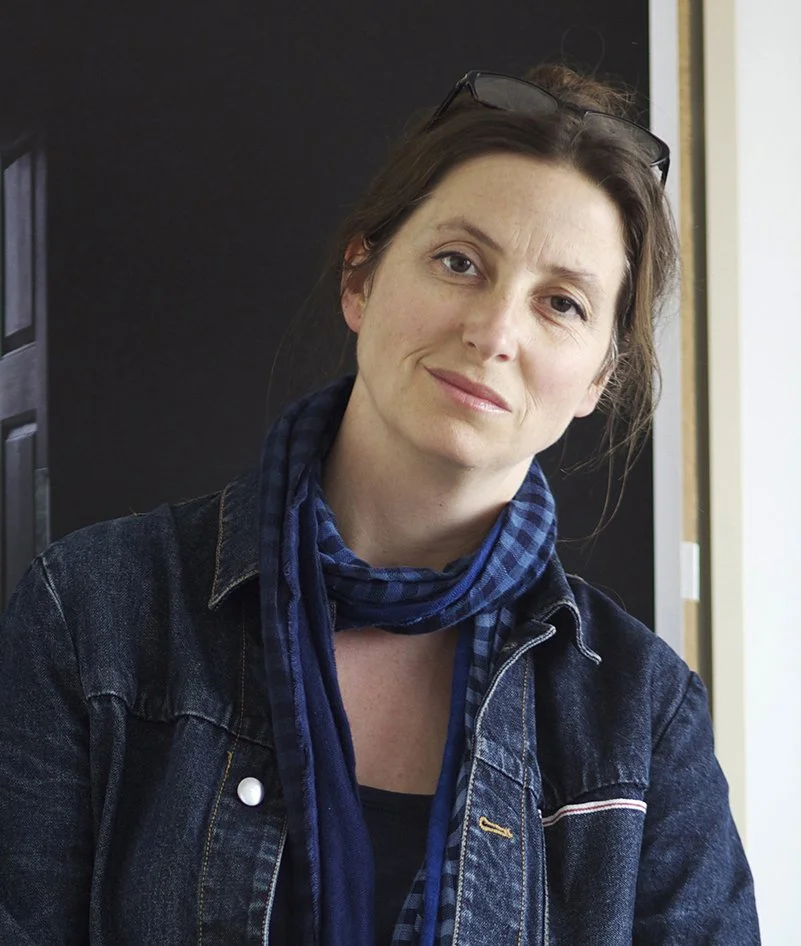
Fiona Crisp is an artist and is Professor of Contemporary Art at Northumbria University, Newcastle where she co-leads The Cultural Negotiation of Science research group. Her recent project Material Sight used photography, moving image and sound to connect us to the extreme remoteness of fundamental science and technology. Her current work explores how publics can gain agency in the current ‘NewSpace’ era of increasing commercialisation and militarisation. Her work is held in several national collections including The Tate, Arts Council Collection, British Council Collection, Government Art Collection and by the National Trust. Fiona’s book, Wrongfooting, exploring thirty years of her practice, was published at the end of 2025 by Matt’s Gallery, London who also represent her work.
Luis Guzman

Luis Bernardo Guzmán is an artist and researcher working at the intersection of contemporary art, space technology and biotechnology. He is a PhD candidate at Northumbria University, Newcastle, within the Space IDRT, and is the founder of Radix-Lucis Studio and co-director of The Foundry—an artist-led orbital art laboratory operating through a permanent allocation of slots within the MISSE system on the International Space Station. His recent projects develop spaceborne artworks designed to interact with the space environment—microgravity, radiation, vacuum and orbital time—as material conditions. Guzmán has presented work internationally including Ars Electronica, MIT Space Exploration Initiative, London Design Fair and the Museo de Arte Contemporáneo de Chile, and he currently has artworks deployed aboard the International Space Station and a satellite mission.
Dr Bill Garrett
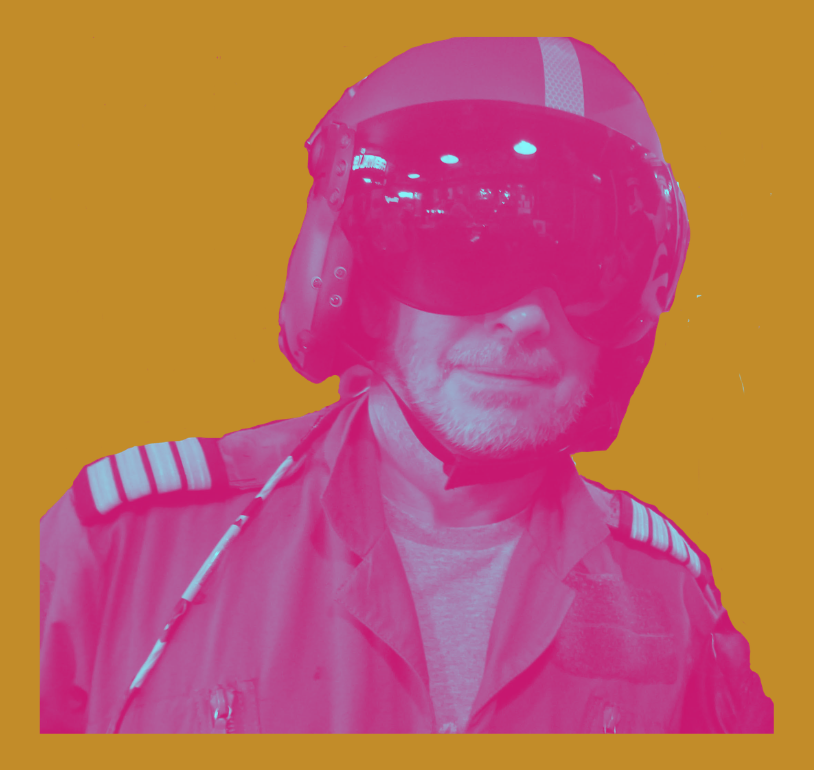
Dr Garrett is one of the three co-founders of Cosmic Frequencies, and has had more careers than there are stars in the galaxy. As a kid, Bill had a natural talent for fixing electronic gadgets around the house, which led him to pursue first a degree in software engineering, then a PHD in cognitive neuroscience, where he specialised in visual processing and cockpit design. Bill then ingeniously combined his love of TV and early UK rave culture by switching careers to a journalist, landing a job as news reporter with Granada Television and working for TV presenter and Factory Records/ Hacienda Club founder, the legendary Tony Wilson.
Fast forward through the years, and Bill held roles as reporter with Greater London Radio (the forerunner to BBC6 music), then at BBC TV as investigative journalist, series producer (including The Money Program) and eventually Director of Production Technology. Somehow, while working in Sydney as head of production technology at SBS TV, he learned how to fly, and did a stint as a helicopter flight instructor where he had to warn students to be on the look-out for pelicans dangerously swooping around Sydney Harbour.
Bill currently runs his own embedded engineering company BHV Broadcast where he develops electronics and software solutions for key brands in the broadcast and medical sectors. He is currently writing a book about his experiences with Tony Wilson and the early ‘90s Manchester scene.
Graeme Rendall
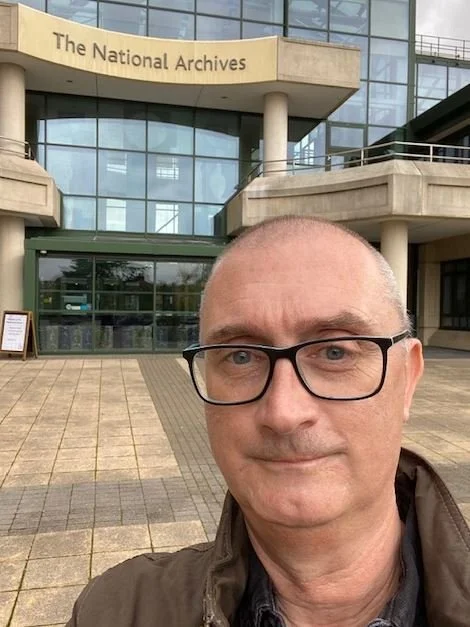
Graeme Rendall is an aviation historian, author of 20 books and a commentator on Unidentified Aerial Phenomenon (UAP), also known as UFOs. In 2022, he wrote a critically-acclaimed work looking at the "Foo-Fighters" witnessed during World War Two, plus the numerous wartime cases involving strange lights and objects that occurred before the term was coined in November 1944.
In addition to this, Graeme has written a series of books dealing with aerial UFO encounters between 1946 and 1956, plus a history of the French UFO Wave of 1954. Possessing an interest in the UFO subject for around 50 years, he has delivered presentations at conferences in Roswell, New Mexico, and across Britain. He also has his own YouTube channel, Bitesized UFOs, which examines less well-known sightings over the last eight decades.
Graeme has been an aviation and World War Two history enthusiast from an early age, when he was given model aircraft kits "to keep him quiet". A love of science fiction novels eventually led to him acquiring his first book on UFOs, but that's another story.
Dan Pye
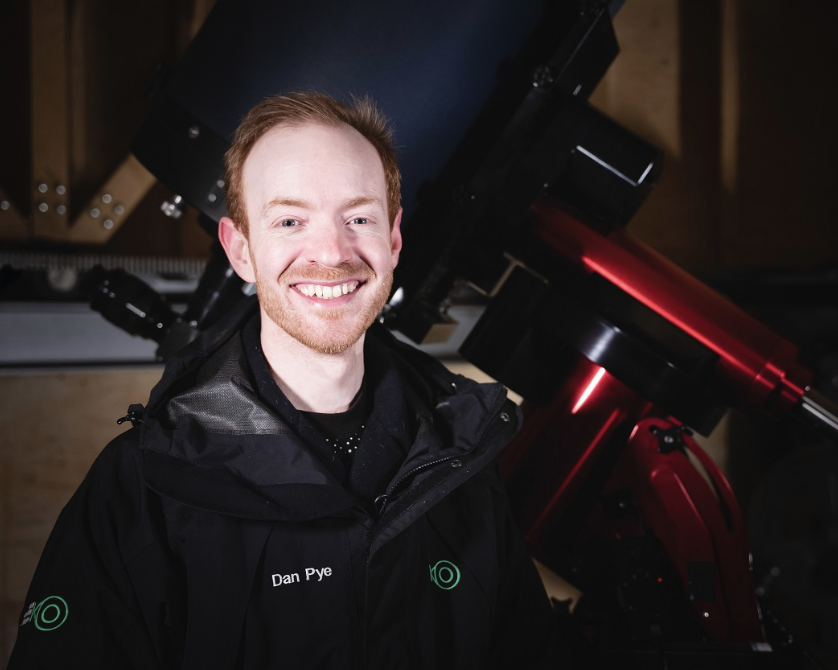
Although my day job is running Kielder Observatory, can't really remember a time when I wasn't obsessed with the stars, space, and the contemplation of what is out there, it's something which has bred within me throughout my entire life. My most vivid memories of school are projects surrounding space, including construction of a giant toilet roll Hubble. The first object I remember seeing through a telescope was when I was in primary school when my Mum took me to the local Observatory in Pontefract where I grew up, I remember seeing Mars and the mountain ranges on the Moon, I became so obsessed I even had subscriptions to Music of the Planets, and developed a deep love for Sci-Fi.When I left school, I moved on to study TV and Film production and then Theatrical Studies at University, but Astronomy and Star Gazing was always embedded as a strong hobby. I visited the Observatory around 10 times before volunteering, and after a few months I became part of the full time team, and what a journey it has become. My primary specialities are Observational Astronomy, Planetary Sciences, Astrophotography, and Meteorites. When I am not star gazing, I'm working on making improvements, or testing the boundaries of technology to bring more exhibits to the Observatory.
Daniela De Paulis
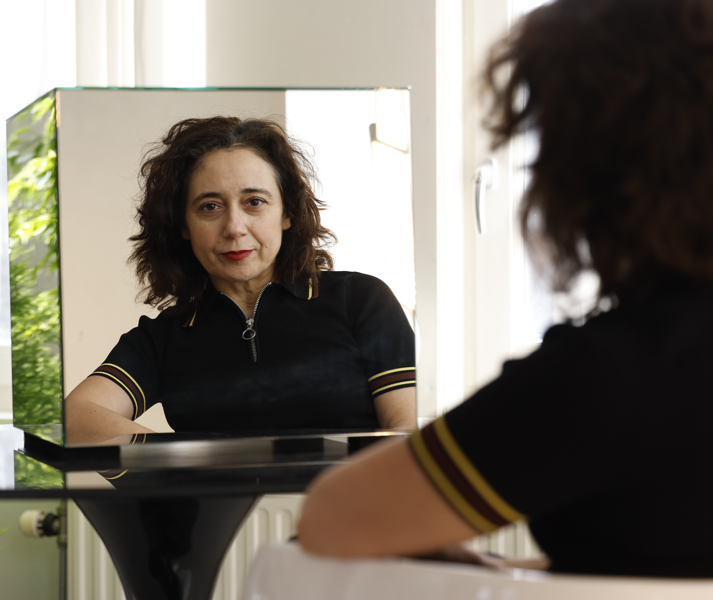
Daniela de Paulis is a media artist, artistic director and a licensed radio operator. Her artistic practice is informed by Space in its widest meaning. Since 2009 she has been implementing radio technologies and philosophies in her art projects. She is currently Artist in Residence at the SETI Institute (California) and Research Fellow at the Green Bank Observatory (West Virginia), with the support of the Baruch Blumberg Fellowship in Astrobiology. She also collaborates with the European Space Agency, INAF (Italian Research Institute for Radio Astronomy), the Donders Centre for Neuroimaging and the University of Cambridge, among other prestigious institutions. In 2009 she developed the Visual Moonbounce technology, in collaboration with international radio operators, and for the past two decades she has been creating innovative projects combining radio technologies with live performance art and neuroscience. She is a Corresponding Member of International Academy of Astronautics (IAA), a member of the SETI (Search for Extraterrestrial Intelligence) Permanent Committee, and a member of the editorial board for the Springer Space and Society series. In addition to her artistic practice, she has published academic papers with Acta Astronautica, the Leonardo MIT Journal, Routledge, Springer, Cambridge University Press, Oxford University Press, Inderscience and RIXC, among others. She is the recipient of the Art of Neuroscience Prize 2022 and the recipient of the Europlanet Prize for Public Engagement 2023. In November 2023, the International Astronomical Union named asteroid 52959 Danieladepaulis.
Steve Crabtree
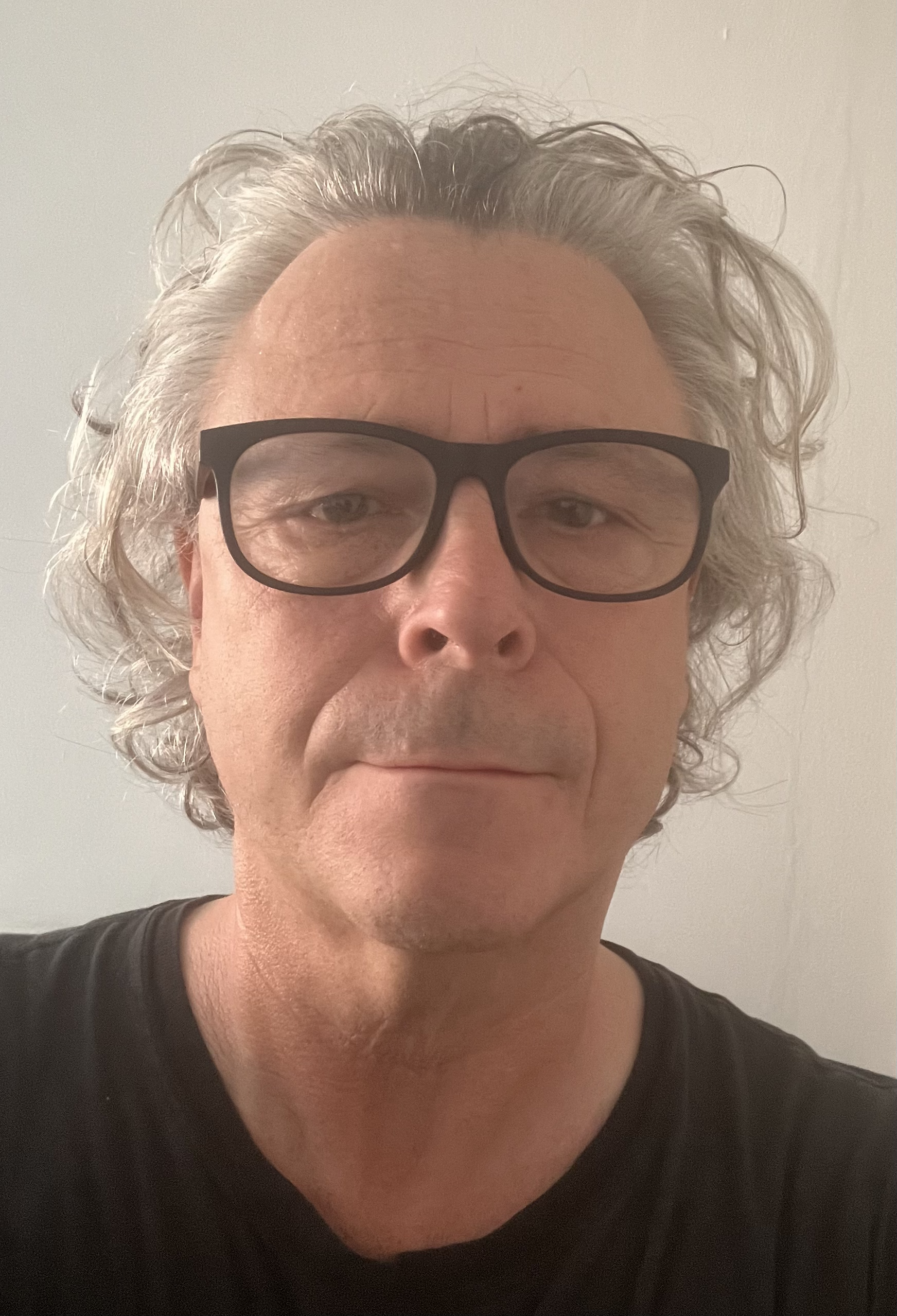
I am an award-winning and Emmy / Broadcast-nominated Executive Producer working across a varied range of specialist factual genres and formats with both UK and international broadcasters.
I have worked with top specialist factual talent like Sir David Attenborough, Prof. Brian Cox, Hannah Fry, Chris & Xand Van Tulleken and Maggie Aderin-Pocock to name just a few.
Between 2014 - 2019 I was Series Editor and Executive Producer of flagship BBC science strand Horizon. As Series Editor I acted as both Commissioner and Executive Producer on over 70 one hour episodes. I also was executive producer for the Sky At Night in 2024.
I regularly deliver masterclasses at the National Film and Television School, Imperial College and UCL and am often invited to appear on discussion panels at events like the World Congress of Science and Factual Producers, the Silbersalz Science & Media Festival and the Shanghai Film Festival. Most recently, I have established my own science-factual company Changing World Productions.
I grew up in Cumbria, and went to art college in Carlisle. Before a career in television, I painted nuclear submarines. Mostly black.
Bram Rosa
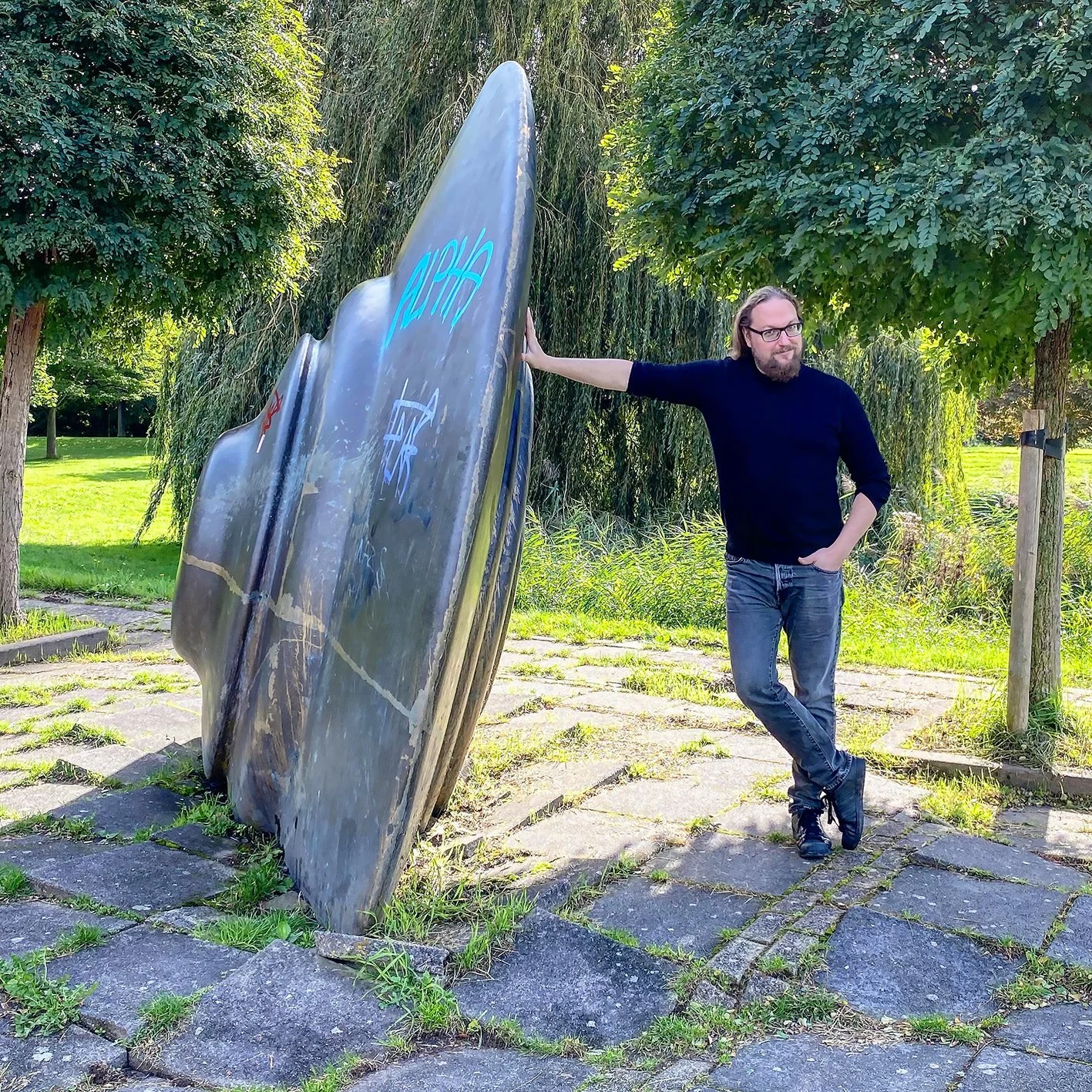
Bram Roza made his film debut in 2018 with the critically acclaimed documentary Xangadix Lives!, about the bizarre origins and impact of the Dutch cult horror film The Johnsons.
His second film is a logical continuation of a lifelong fascination. As early as primary school, all his speeches and papers were about UFOs. That curiosity never left. In 2005, Roza founded the Dutch UFO Reporting Center, which today receives around 100 reports each month.
Through this work, he has spoken with countless ordinary people with extraordinary stories. With The UFOs of Soesterberg, Roza presents these testimonies without sensationalism — letting witnesses speak for themselves.
His goal: to show that UFOs are not just an American pop culture phenomenon, but a global reality. The UFOs of Soesterberg is the first Dutch documentary about this elusive mystery.